
15.01.2026 Cultural transfers as historical method. The case of Poland and Germany-prof.Michel Espagne
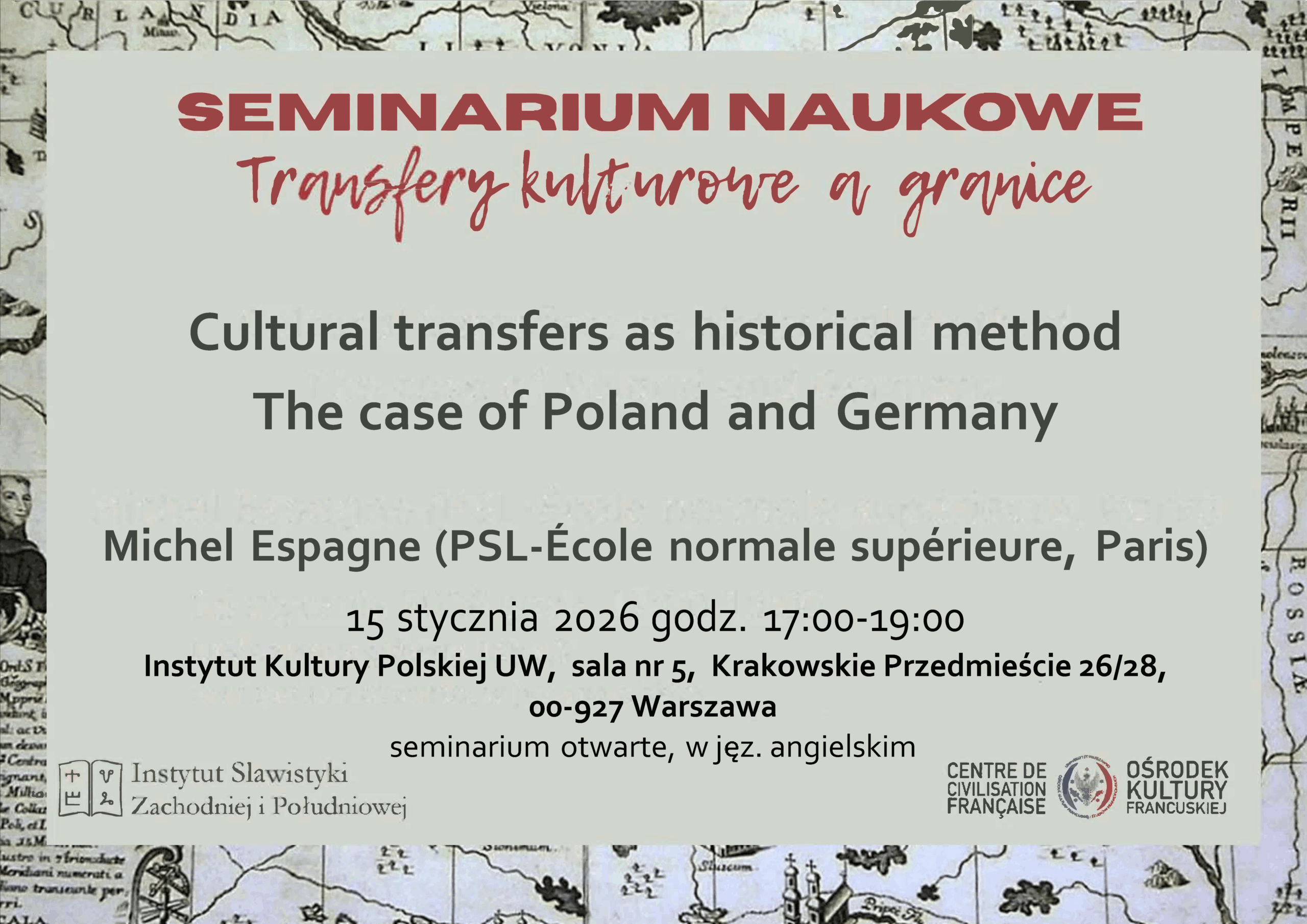
Cultural transfers as historical method. The case of Poland and Germany – prof. Michel Espagne
15.01.2026 17.00-19.00, Instytut Kultury Polskiej, Krakowskie Przedmieście 26 sala nr 5
Michel Espagne (PSL-École normale supérieure, Paris)
Cultural transfer research originally developed in the German-French context. The initial aim was to identify the German contribution to French history and the French presence in German history. The German-French example offered the opportunity to write a European history that is not merely a compilation of individual national histories, but one that could reveal the highly complex intertwinings that form the basis of this shared European history. The tabular parallels of comparative history and the comparative enumeration of the national manifestations of a literary or aesthetic motif have long been criticised for presupposing a non-existent neutral observer, for separating the constellations to be compared from their historical origins and examining them as stable objects of research, even though they are often deeply nested.
Against this background, the history of Poland over the last few centuries is particularly exemplary, because Poland, more than other European territories, has had to deal with foreign influences. The reinterpretation of German cultural imports to Poland, the history of Polish or multicultural cities that belong or formerly belonged to Polish territory, demographic movements and even the division or displacement of Poland have triggered cultural transfers that have shaped the entire history of Europe. Due to the division of Poland, regional differences are certainly more pronounced than elsewhere. From Poznan/Posen to Lemberg/Lvov/Lviv, the entire spectrum of case studies conceivable under the term cultural transfer can be found. Polish history offers this research approach the best field of experimentation.